Introduction:
 Few
Gambian people own the dogs seen roaming the streets, and they
are generally poorly treated (or simply ignored) because touching
them is seen by
Muslims as an unclean act. Few
Gambian people own the dogs seen roaming the streets, and they
are generally poorly treated (or simply ignored) because touching
them is seen by
Muslims as an unclean act.
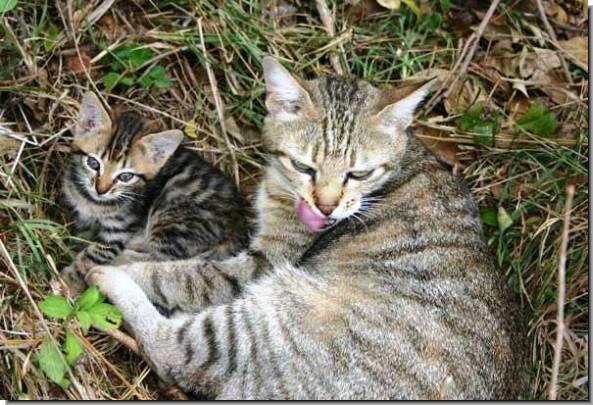
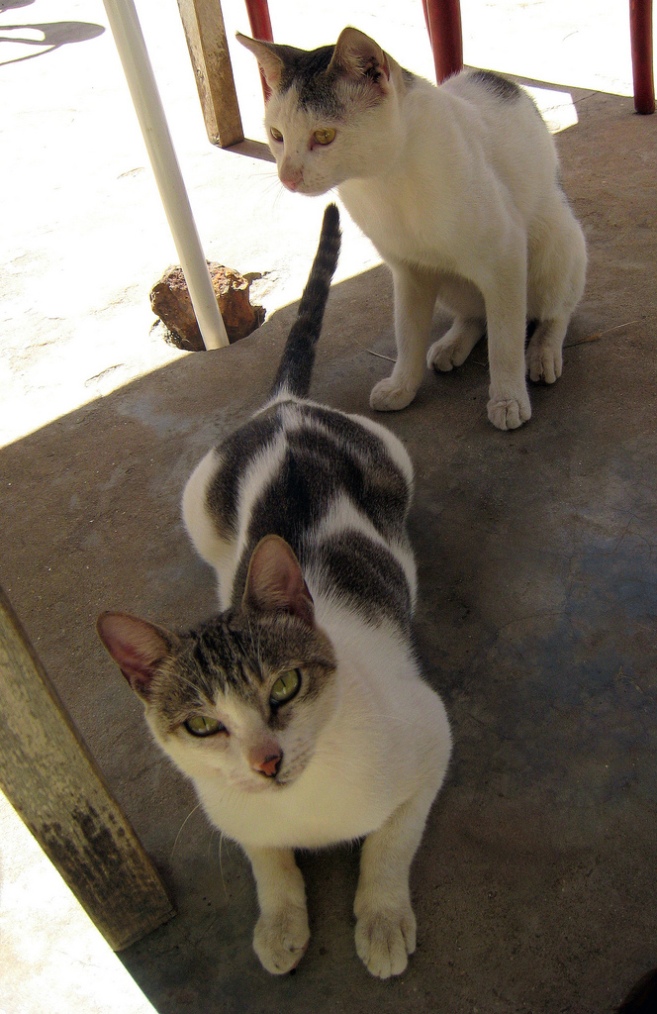
Cats are similar as they are rarely kept as pets, gangs of them
can be seen hanging around the various hotels,
begging for food. It is unwise to pet stray dogs and unfamiliar
cats due to the risk of rabies, not to mention the more likely
risk of contracting a disease like ringworm.
An interesting fact about cats is that their local name,
"muus" also means wise.
Local Conditions:
Beach dogs have an insecure life in The Gambia. While the tourist
season lasts they are put up with around most of the ocean side
beach bars and get a little water,
food and maybe worming medication from anxious tourists.
A central feeding point for cats is at the Kombo
Beach Hotel called the Cat Cafe. Some of these people sometimes
contact a charity called GambiCats
which has been in working in The Gambia since 1998. They organise
humane neutering or vet
treatment for these stray animals and are concerned about improving
their general welfare.
 Off-season
however, the local treatment of dogs is very different. The animals
drift away from the beach as there are no longer easy pickings.
However, cats tend to fair a little better as most houses tolerate
feral cats whom which leftovers from lunch are frequently fed
to. This is often dictated by the Islamic custom which says that
one should never throw away food. Off-season
however, the local treatment of dogs is very different. The animals
drift away from the beach as there are no longer easy pickings.
However, cats tend to fair a little better as most houses tolerate
feral cats whom which leftovers from lunch are frequently fed
to. This is often dictated by the Islamic custom which says that
one should never throw away food.
Neutering:
The local practice is not to neuter cats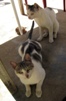 and dogs but to leave them to wonder freely while being subjected
to occasional stoning, poisoning, becoming victims of road kill,
bad health and starvation.
and dogs but to leave them to wonder freely while being subjected
to occasional stoning, poisoning, becoming victims of road kill,
bad health and starvation.
The government department who care charged with controlling the
numbers of dogs and cats is the Abuko
based Livestock Services Department or DLS for short.
Another notable organisation in animal welfare is the Association
for the Welfare of Animals in The Gambia (AWAG). It was established
in 1999 as a registered animal charity whose aims are threefold.
(1) To promote better quality of care for animals and to alleviate
suffering where necessary by providing veterinary assistance and
through local education programmes.
(2) To raise official awareness about the plight of animals and
their local environment.
(3) To participate in the improvement of better legislation and
assisting in its local enforcement. |
| |
|


 A
to Z of Travel Animal
Charities
A
to Z of Travel Animal
Charities