 Introduction:
Many expatriates to Gambia live between Fajara,
Kololi, Kotu
up to Bijilo, Brufut
Heights and Taf Construction's Brufut Gardens Residence where
there are houses for sale and
rent.
Where is Gambia?
The Gambia is a small West African sub-Saharan country, some 13°
north of the equator. It consists of a narrow strip of land either
side of the River Gambia
bordered on 3 sides by Senegal and facing the Atlantic Ocean beaches.
The Capital is Banjul which
is on the coast at the mouth of the River
Gambia. The airport
is Banjul International Airport (Yundum), and is about 30 minutes
car journey from Kololi which is approximately
16 kilometres from Banjul.
Who are the People?
50% of the population of 1.5 million live in villages, the rest
in the expanding urban areas which are mainly on the coast. Islam
is the predominant religion (90%),but Christianity
and other denominations are represented.
Many local languages are spoken (the
main ethnic groups are Mandinka,
Wollof, Fula,
Jola and Sarahule)
and a number of people speak French. English is the official language.
The Mandinkas are the largest ethnic group in The Gambia. The
Wollofs are fewer than the Mandinkas as a whole, however they
form the largest group in Banjul.
The second largest group are the Fulas who live mainly in the
eastern part of the country, particularly in Upper River Division.
The Akus, who are mainly Christians, live
in Banjul and The Kombos. The Jolas live in a large area to the
south of the River Gambia, the majority living in Western Division
in the Fonis, The Kombos and Banjul. The Sarahules, who are predominantly
traders, live mainly in the eastern part of the country, i.e.
Upper River Division. The different ethnic groups live harmoniously
together as a community and in many cases inter-marry.
Read more about the culture.
The Gambia is relatively cosmopolitan with several non-governmental
organisations and international companies recruiting from within
The Gambia and abroad.
The Currency:
100 Bututs = 1 Dalasis, 44.50 Dalasis = £1 Sterling as at January
2011 (variable). It can be useful to have a few Dalasis with you
on arrival. Your bank may require sufficient time to obtain Dalasis.
You can always exchange your pounds at the airport. You will obtain
a much better rate of exchange
in The Gambia, so don’t buy too much in advance. Traveller’s cheques
and sterling can be changed at the airport,
at any of the local banks, from foreign
exchange bureau and at most
hotels in The Gambia.
One thing to consider is opening an offshore banking
account which may give your money tax haven status while working
overseas. Offshore banking could have tax benefits for individuals,
as interest on your offshore account could be paid without tax
being deducted.
Good post for families/singles/couples?
This is a hard question to answer, because everyone is different.
Most people will base their answers to this question on ability
to create an interesting life from scratch. As a single, you may
find there is plenty to do here, and if you're a couple, you could
be very happy. As for families with kids, there is no reason why
they couldn't do well here as there are a number of international
schools. Again, it depends on how much Western-style, external
stimulation you need to stay happy and sane.
What’s
the climate like?
There are two separate seasons. The dry season begins in November
and normally lasts until the first rain in early June. The country
becomes dry and dusty as the season progresses. It rarely rains
during this period although it can be overcast for several days
on end. Pre-Christmas the skies are usually clear, but thereafter
there are dusty days. At the coast it is coolest from December
to February, especially in the early morning. The Christmas period
is occasionally overcast.
During the wet season from June to October vegetation becomes
lush and it feels hot and humid. The rainstorms last from one
to a few hours, with August being the wettest month, and the temperature
can drop dramatically while it is raining. The humidity during
the wet season makes the climate rather tiring, therefore you
would be wise not to be too ambitious about what you hope to achieve
during your first few days in The Gambia until you have started
to acclimatize. Temperatures on the coast fluctuate between 20oC
and 30oC in the dry season with low humidity giving a Mediterranean-like
climate. It is 5 - 9 C hotter inland. In the wet season temperatures
usually remain in the low 30s but with high humidity.
What's The Length of the Day?
Length of day the average length of day is 12 hours, with dusk
being a brief half hour. As The Gambia is within the tropics day
length varies by only an hour during the year. Sunrise/sunset
is between 7.00 - 7.30 am/pm
What Time Zone is it in?
Greenwich Mean Time.
Driver's
Licence
What is the crime rate like?
 Not
too high. Crime rate is very low, and
violent crime virtually non-existent. You may be mugged if you
stagger drunk down a dark dirt road at 3:00 in the morning, but
other than that you're pretty safe, and even then, it won't be
more than stealing your wallet. As for terrorist threat, although
Gambia is 95% Muslim, it's very laid-back and generally are supportive
of the Western lifestyle. Generally speaking, Gambia is a very
safe place. Not
too high. Crime rate is very low, and
violent crime virtually non-existent. You may be mugged if you
stagger drunk down a dark dirt road at 3:00 in the morning, but
other than that you're pretty safe, and even then, it won't be
more than stealing your wallet. As for terrorist threat, although
Gambia is 95% Muslim, it's very laid-back and generally are supportive
of the Western lifestyle. Generally speaking, Gambia is a very
safe place.
What is there to do after-hours?
If you're a bar-hopping party animal, there are several good dance,
karaoke, and jazz bars. The country
has a plethora of restaurants
and cafes, as well, and night
life revolves around these. We also rely heavily on entertaining
at home. Banjul has several, relatively large casinos that seem
to consist mostly of slots. There are virtually no movie theatres
however, satellite systems
and DVD players are available. Consider getting them from LG
Electronics as they offer a 1 year guarantee with an extended
warranty.
Fast food available and price of a Big Mac Meal (or similar)?
There are quite a few places in the way of fast
food in Gambia. Again, a blessing to some, a curse to others.
There are however lots of takeaway
diners.
What language do I need to learn?
In Gambia English is the official language,
and almost everyone speaks it with varying degrees of fluency
and understand-ability. However, all Gambians speak to each other
exclusively in a local language, generally Mandinka
or Wolof. You should make an effort to
learn one or both languages, as you will win lots of friends,
get good prices in the market, and the touts (known locally as
"bumsters") won't harass
you. Also, at your next cocktail party at home, you can impress
your friends.
What is the social life like?
Entertaining/social life? Pretty good. Gambians are extremely
warm and generous people, and delight in having foreign guests
come to their homes. Sometimes you might be invited to spend pleasant
evenings in the yard of a Gambian colleague's home, sipping tea
after a good Gambian meal, talking, and watching the stars.
What is the morale among expats like?
Generally very high.
What are the medical facilities like?
 Medical
care is good for minor accidents and illnesses, but truly catastrophic
events would be better handled by a medevac team. The best place
in town for medical care is the British Medical
Research Council; there are a few other clinics
in town with doctors trained in the UK. Local dentists here tend
to like yanking teeth out rather than actually fixing them; you
are best advised to seek a US or European trained dentist. They
can be found at the Dental Oral
Surgery or the Swedent Clinic
where they also perform root canal operations. Medical
care is good for minor accidents and illnesses, but truly catastrophic
events would be better handled by a medevac team. The best place
in town for medical care is the British Medical
Research Council; there are a few other clinics
in town with doctors trained in the UK. Local dentists here tend
to like yanking teeth out rather than actually fixing them; you
are best advised to seek a US or European trained dentist. They
can be found at the Dental Oral
Surgery or the Swedent Clinic
where they also perform root canal operations.
What Can I leave Behind?
All your winter clothes except a couple of jumpers (you might
need them around the end of the year) as the climate is tropical.
Anything you don't want to get damaged, such as glass, antique
furniture and delicate clothing etc., because the climate is humid,
and domestic workers are unaware of special treatment that some
textiles require.
Medical Issues:
Always consult your doctor first.
Don't forget travel insurance.
Important Long-term Vaccinations:-
Yellow Fever: Vaccination, which is valid for 10 years, is strongly
advised. If you are planning to travel to neighbouring Senegal
a Yellow Fever vaccination certificate is essential.
Hepatitis B: This is a major health risk, particularly to those
working with medical patients, survey subjects or laboratory specimens
in The Gambia (over 10% of the population carry the virus).
Hepatitis A :
Three doses of vaccine are strongly recommended before arrival
in The Gambia.
Tetanus Toxoid:
A single booster dose is strongly recommended every 5-10 years.
 Human
Diploid Cell Rabies vaccine: Human
Diploid Cell Rabies vaccine:
Rabies is endemic in The Gambia. Two intra-dermal doses one month
apart are strongly recommended before arrival in The Gambia. A
booster dose is required every three years.
Diphtheria & Whooping Cough:
Both commonly occur so it is therefore it is recommended that
babies receive the normal course of 3 doses of triple vaccine
(diphtheria, tetanus and whooping cough) before departure to The
Gambia.
BCG:
This gives some protection against Tuberculosis, which is common
in The Gambia. It is, therefore, advisable for children and adults
to have BCG vaccination before departure for The Gambia.
Cholera vaccine: This is of limited value.
Typhoid: A single dose provides protection for three years when
a booster is recommended.
Meningococcal meningitis: Single dose
It is advisable that you have the vaccination status of yourself
and your family reviewed every 3 years
Malaria Chemoprophylaxis:
You and your family should take malaria prophylaxis routinely,
particularly from July to December (the rainy season). There are
several options - Mefloquine (Lariam) 2 tablets weekly; OR Chloroquine,2
tablets (300 mg) weekly AND Proguanil (Paludrine),2 tablets (200
mg) daily; OR Pyrimethamine (Daraprim) 25 mg weekly OR doxycycline
100 mg daily. These are adult doses and should be reduced appropriately
for children. Anti-malarials should be started 3 days before departing
for The Gambia and should be continued for 4 weeks after your
departure. No prophylaxis provides complete protection against
malaria. Your accommodation must have mosquito screens on all
the windows; further protection is obtained by sleeping under
an insecticide-soaked bed net and using DEET repellants.
General advice It is recommended that you boil and filter all
drinking water, particularly outside
the Greater Banjul area. Avoid ice in drinks and take care when
eating food in local restaurants & beach
bars (especially salads). Do not swim in natural fresh-water
pools or streams to avoid bilharzia. Beware of sunburn, particularly
on beaches, even on hazy days.
Have your eyes and teeth examined before you leave.
FACILITIES IN THE GAMBIA:
Banks:
The banks at Fajara open from 8.30
- 11.30 am and 4.00 - 6.30 pm Monday - Friday and from 4.00 -
6.30 pm on Saturdays. If you have a Gambian bank
account there are automatic cash machines outside most of
the banks and petrol stations.
Credit cards are
becoming more widely accepted in The Gambia and can now be used
in some supermarkets and restaurants.
However the exchange rate is generally not very good.
What are the housing conditions like?
See also  Property
Finder
Property
Finder
Is housing predominantly apartments or houses with a garden area?
Housing is 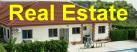 predominantly
houses with a garden area of varying sizes generally containing
at one fruit tree: orange, mango, banana, papaya, grapefruit,
avocado, or a coconut tree. Some houses have a swimming pool.
Apartment-style living is not common for expats; apartments are
plentiful, but are generally for holiday makers and short-term
visitors. Houses for rent are fairly cheap here. It is possible
to get a decent 4 bedroom bungalow with a garden and for about
£260 per month. predominantly
houses with a garden area of varying sizes generally containing
at one fruit tree: orange, mango, banana, papaya, grapefruit,
avocado, or a coconut tree. Some houses have a swimming pool.
Apartment-style living is not common for expats; apartments are
plentiful, but are generally for holiday makers and short-term
visitors. Houses for rent are fairly cheap here. It is possible
to get a decent 4 bedroom bungalow with a garden and for about
£260 per month.
Availability and cost of domestic help? Readily available, and
costing around £70 - £90 per month for a maid and roughly the
same amount for a freelance garden boy / watchman.
Public Transport:
Local taxis (which are usually shared)
are painted yellow with a green stripe and tourist taxis, which
are more expensive, are green with a white diamond. It is advisable
to negotiate the price before you enter the vehicle
Restaurants:
Are there Any Good
Restaurants?
The simple answer is yes. The largest surprise you'll find over
the west coast region of The Gambia is the variety and number
of fine quality restaurants. Mostly Lebanese
or Continental (UK) cuisine, but you can easily buy pasta, a burger
or pizza, and there are over
10 superb Indian
and Chinese restaurants.
Schools:
For children of school age there are the following schools:
Marina International
School, based in Bakau, which follows the British National
Curriculum for children from the ages between 3 and 16 years.
Then there is the Banjul American International School where tuition follows the American curriculum. For
children who do not speak English well they provide a special
English as a foreign language class or EFL.
Then there's the Ecole
Francaise de Banjul where tuition is in French, follows the
French national curriculum. Ages 2½ to 15.
Tel: 449 54 87
Zenith
Preparatory School conducts its tuition in English, follows
the English system. The prep school is comprised of three-class
Pre-School from Receptions 1 through 3, for children aged 3 -
5 rising 6 years old; and a Primary School starting from 1st Year
(grade 1) to 6th Year (grade 6).
Tel: 449 4233
Shopping
Advice:
What Can I Buy For Groceries?
There are many supermarkets in
the Fajara area
which are well-stocked with imported food. They normally open
at 9.00 am and close at 7.30 pm Monday - Saturday although some
open later. Some of the supermarkets also open from 10.00 am -
2.00 pm on Sundays and Public
Holidays. Availability varies so be prepared to go to several
when looking for items.
There are several well-stocked grocery store chains in Gambia
carrying a variety of European and Middle Eastern products, with
a small selection of well known American food brands. You can
purchase meat and vegetables at markets throughout the Greater
Banjul Area though, for the sake of hygiene you are best advised
to buy your meats from a company called Kombo Meats or at your
local supermarket. For freshness you can buy fish directly off
the fishing boats at Bakau.
There are many types of fish and shellfish available e.g., Red
Snapper, Sole Fish, Ladyfish, Crayfish, Grouper, Barracuda,
Prawns and other types.
If you have a strong urging for some American products like Pop
Tarts, you can always get them from a number of well stocked supermarkets
along the Kairaba Avenue or
at Maroun's Supermarket
in Kololi. Products are on the whole quite good, organic and therefore
often much tastier than what you can buy in Europe or the US.
The only issue is the lack of options. You can obtain your standard
fruit and vegetables but things like celery and fresh mushrooms
are hard to find and can be quite expensive as many are imported.
The same issue affects fruits like grapes, apples and strawberries.
There are a number of local markets which sell locally produced
food which are often seasonal in nature. The markets usually open
at 8.00 am and close just before sunset. A company called GAMVEG,
on Kairaba Avenue, sells imported and local fresh eggs, vegetables
and the like.
Sports:
There is a recreational club at Fajara
called the Fajara Club which has
a bar, restaurant for poolside food, swimming pool, golf course,
a squash court,2 tennis courts, a badminton court and facilities
for table tennis. There are also a number of gyms for a good work
out.
|
|

|
|


 Expatriates contacts
Do's & Don'ts
Driving Licence
Expatriates contacts
Do's & Don'ts
Driving Licence


