Musical Overview:
 The main ethnic groups are Mandinka,
Fula, Wollof, Jola and Sarahule. Each of these groups has its
own particular traditional music and dance
forms associated to particular musical instruments. The Mandinka
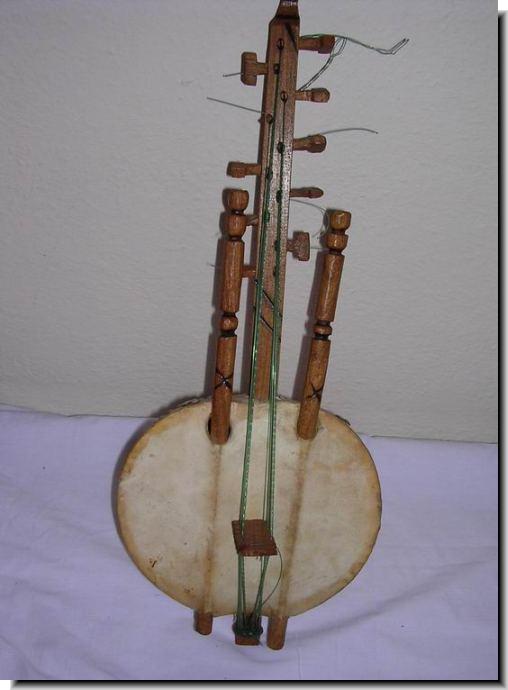
have the Jalis (oratorical folk storytellers) who use the Kora
lute and sing.
The main ethnic groups are Mandinka,
Fula, Wollof, Jola and Sarahule. Each of these groups has its
own particular traditional music and dance
forms associated to particular musical instruments. The Mandinka
have the Jalis (oratorical folk storytellers) who use the Kora
lute and sing.
Instruments:
Local musical instruments are made from local materials such as
wood, hide, calabash gourds and horns.
The Djembe is a drum is common
to all ethnic groups and are played at events marking rites of
passage such as ceremonial weddings, naming ceremonies and social
gatherings. (See also Tama.) The Boucarabou
are played by the Jola which is comprised of several drums with
different pitches which is played all at once by the same drummer.
For bass beat musicians use the drums and for melody they use
the Koras, Balafon, Xalams and Bolonbatas.
The Jalis from the Wolof people developed a wide variety
of instruments that have become staples of today's semi-traditional
and popular music. In most areas, Wolof music was rhythmic rather
than melodic. Jalis accompanied their highly energetic, predominantly
monotone speech-song with the Sabarro
(Djembe), the highest drum. They
also used the Bellengo as their bass drum. The Jola and Manjagos
use the Bombolo which is an idiophone created from a long without
animal hide.
There is the calabash called the Sheikeire which is covered in
sea shells or local beads and is shaken with the hands to create
a rattling beat.
 Simbing: Simbing:
This is an earlier version of the kora used by the Diola, it resembles
the shape of the kora but has a curved shaft and only 6 strings.
It may date from the 13th century.
Xalam:
The Wolof (and some of the Serere) have three kinds of lute-like
stringed instrument. Each type produces different sounds but they
all have a long, wooden oval-shaped body covered with skin.
Molo:
This is a one-string lute played with a horsehair bow originating
with the Toucouleur, Mauritanians and the Soninke (Serahule).
Tublub:
A long hollow calabash which is played by old Wolof and Serere
women by striking rhythmically with a piece of wood. One does
not have to be a Griot to play this instrument.
Rhombe:
A simple string attached to a stick, this instrument makes a whirring
noise, which, when used during circumcision and death rites, protects
the initiate and drives away the soul of the departed.
Other
percussion are gourds covered with beads or shells, rattles, bells
or whistles and, something which everyone can use, clapping hands.
 Culture & Traditions Music Musicians Dance
|
|
|
|