  Contact Address Details:
World
Food Programme
WFP Banjul Head Office
3-4 Ecowas Avenue
P.M.B. 10, Banjul
The Gambia, West Africa

Tel no: +220 494782 (Resident coordinator)
Tel no: +220 4228477
4494784
Fax:
4228 634 - Email
|
|
Information:
The World Food Programme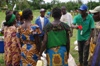 (WFP) has been a partner in The Gambia's development and emergency
feeding program since 1972 through project-oriented food assistance.
The WFP-assisted projects are innovatively designed as catalyst,
combined with other inputs, to revitalise the rural economy
through a range of complimentary development of The Gambia's
human resources through institutional feeding programme.
(WFP) has been a partner in The Gambia's development and emergency
feeding program since 1972 through project-oriented food assistance.
The WFP-assisted projects are innovatively designed as catalyst,
combined with other inputs, to revitalise the rural economy
through a range of complimentary development of The Gambia's
human resources through institutional feeding programme.
To a large extent, the future WFP-assisted programme is expected
to be closely aligned to the Government's Strategy for Poverty
Alleviation.
WFP sees the eradication of poverty and the elimination of
the need for food aid as aspect of one and the same objectives
and to this end, the agency directs its efforts towards supporting
the development of a food
security strategy based on enhancing capacity for increased
production while at the same time strongly advocating the
reduction of dependence on food aid.
As poverty is perpetrated by hunger which in itself is a manifestation
of food insecurity, WFP's food assistance to the Government
is aimed at helping the poor to build assets and promote self-reliance
through food-for-work support to labour intensive works which
are initiated by the communities themselves, have adequate
material, financial and technical support, are technically
sound, and are integrated into the overall divisional and/or
national development aims and objectives. As it is often the
poor who actively participate in food-for-work activities,
food assistance becomes a more efficient means of reaching
the poor with food at times when they need it most and in
ways that achieve lasting impact.
Such food assistance would also serve as a useful tool for
development with a focus on people and consideration is given
to projects which would have the following objectives: (a)
increasing food production through community mobilisation
and emphasis on women rice farmers,
(b) improving rural infrastructure through construction of
community structures such as schools, day care centres, access
roads, causeways, bunds, bridges,
wells, etc., through cooperation with communities, Government
technical departments and NGOs, (c) through day primary school
feeding aimed at areas where female enrolment is low, promote
gender equity and improve female literacy, and (d) support
to rural development and skills training centres with an emphasis
on women's equal participation in management and training.
For people who have been hit by natural disasters or human
crises and their lives are at stake, survival supersedes other
considerations, and timely food assistance provides the only
hope. The main victims are often women and children and the
first goal for WFP at such moments is to provide timely, appropriate
and adequate relief. The provision of relief assistance however
must shift progressively, as early as possible, into rehabilitation
and on to development.
WFP in the fight against poverty and hunger will continue
to deploy food assistance rationally to alleviate hunger,
establish a base for future food security, and save lives
of disaster and conflict affected persons. Targeting of food
assistance is also essential to reach those most in need,
and to minimise the adverse effects such as creation of dependency,
production disincentives and market displacements.
 |