Introduction:
 Due
to the rapid growth in the population of The Gambia in recent
years, demand for energy has far outstripped the ability of the
State owned utility to supply the country. The gross energy consumption
of the Gambia in 1998 was just over 308,000 tones of oil equivalent
TOE which represents 0.28 TOE on a per capita basis. Due
to the rapid growth in the population of The Gambia in recent
years, demand for energy has far outstripped the ability of the
State owned utility to supply the country. The gross energy consumption
of the Gambia in 1998 was just over 308,000 tones of oil equivalent
TOE which represents 0.28 TOE on a per capita basis.
The net energy demand for the Gambia in 1998 was estimated at
287,100 TOE, which is supplied from firewood (225,500 TOE), petroleum
products (61,600 TOE) and electricity (6,300 TOE)2. The two biggest
energy consumers are households and the transport sector.
The major energy resources in Gambia are firewood, electricity,
petroleum imports, Liquefied Petroleum Gas (LPG). The government
has established Gambia Renewable Energy Center (GREC) and seeks
to collaborate with interested companies, individuals, development
charities, research entities for the development of renewable
energy through R & D.
Liquid Petroleum Gas:
 The
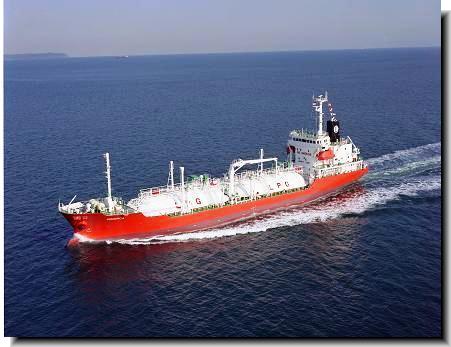
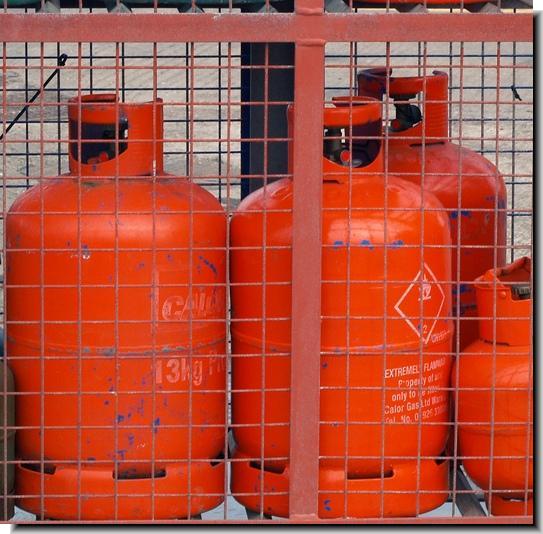
Gambia’s annual consumption of LPG was estimated at 1,350 tons
for the period, 1996 to 1999, while the estimate for year 2,000
was approximately 2,000 metric tons. The share of household consumption,
in total imports, is estimated at 85%, the remaining 15% represents
consumption by the hotel industry. The
Gambia’s annual consumption of LPG was estimated at 1,350 tons
for the period, 1996 to 1999, while the estimate for year 2,000
was approximately 2,000 metric tons. The share of household consumption,
in total imports, is estimated at 85%, the remaining 15% represents
consumption by the hotel industry.
Electricity:
 The
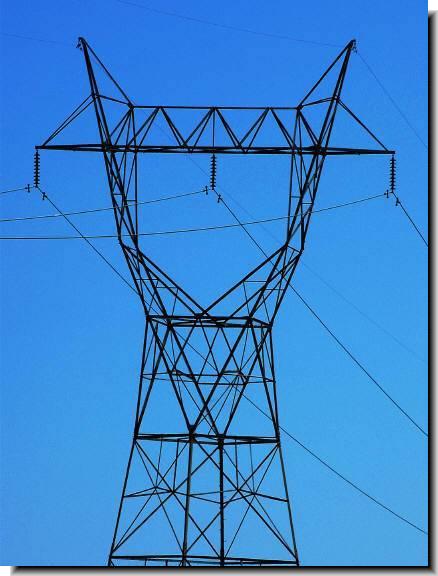
provision of reliable electricity to The Gambia has become a priority
for the Government and there are investment opportunities at all
levels. Generating capacity is substantially below demand, the
distribution system, while adequate for existing generating levels
will need investment and particularly with the development of
industry and tourism up-country, opportunities will arise there
also. The
provision of reliable electricity to The Gambia has become a priority
for the Government and there are investment opportunities at all
levels. Generating capacity is substantially below demand, the
distribution system, while adequate for existing generating levels
will need investment and particularly with the development of
industry and tourism up-country, opportunities will arise there
also.
Fuel-Wood:
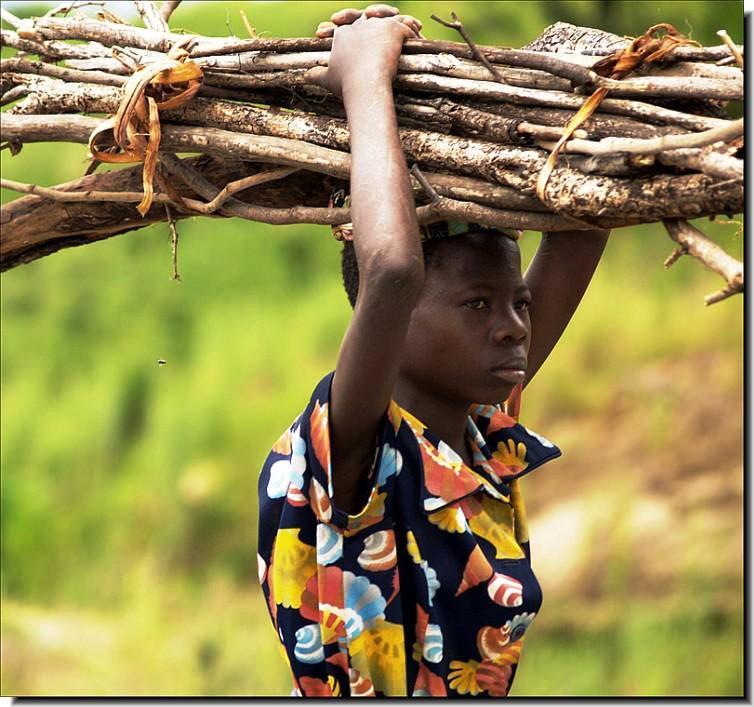
The most commonly used energy resource in the Gambia is firewood.
The burning of fuel-wood for cooking & other uses accounts
for over 80% of total energy consumption in Gambia ranging from
228 thousand TOE to 375 thousand TOE from 1990 to 2004 fuel wood.
According to the 2004 Energy Balance, in The Gambia, 485,000 tons of firewood is used annually to meet the energy needs
of 90% of the population, 60% of total fuel-wood used is consumed
by the rural population for cooking.
485,000 tons of firewood is used annually to meet the energy needs
of 90% of the population, 60% of total fuel-wood used is consumed
by the rural population for cooking.
Firewood has the largest share of both the national energy and
the household energy balances. Its source is the forest and by
virtue of this relation, its administration as a produce of forest
resource falls under the purview of the DOSFNRE as the line department
of state responsible for forestry affairs. The Forestry Department
is the technical organ responsible for technical advice as well
as operational, administrative and managerial aspects of forestry.
Commercial Trade: The
Forestry Act has provision for the regulation of the movement
of forest produce. It requires producers and sellers of fuel-wood
to be in possession of valid licences issued by a competent regulatory
authority. In addition, every transport load must be accompanied
by a valid receipt and a removal permit. The Act also requires
a producer to employ not more than three assistants to a licence
holder; only dead trees are allowed to be cut; and the truck loads
and the number of licences to be issued per division, are regulated.
The Fuelwood Vendors Association (FVA) was registered in 1996
as a charitable organisation. It has a loose structure and has
a membership of about 3,000, comprising persons involved in the
traditional firewood trade.


|
|
Renewable Energy:
Solar:
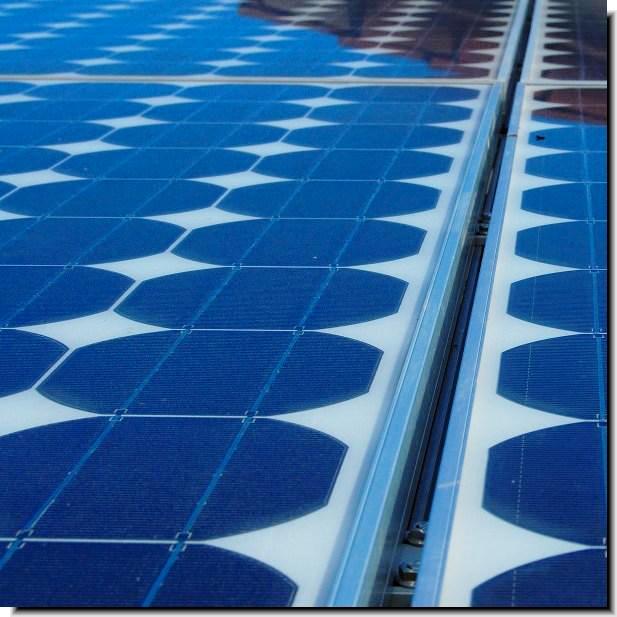
 The Gambia's geographical location gives it plenty of sunlight
hours. The country receives 2,500 hours of sunshine yearly and
the daily solar energy potential is an average 2.5 kJ per square
centimetre area (2.5KJ/cm2). The government is encouraging use
of alternative energy and the use of solar PV cells and associated
equipment is on the rise be it for domestic, commercial or industrial
use.
The Gambia's geographical location gives it plenty of sunlight
hours. The country receives 2,500 hours of sunshine yearly and
the daily solar energy potential is an average 2.5 kJ per square
centimetre area (2.5KJ/cm2). The government is encouraging use
of alternative energy and the use of solar PV cells and associated
equipment is on the rise be it for domestic, commercial or industrial
use.
The use of alternative and renewable energy in the country is
gaining recognition, especially the use of solar PV. This interest
comprises both individuals and groups. However, the deterring
factor in the widespread utilization of renewables is the initial
cost of investment, which is beyond the reach of many Gambians.
Most solar PV and wind installations are donor funded. The cost
of the systems is tied to foreign exchange fluctuation. A 55 Wp
solar PV costs about D11,000 while a 75 Wp costs about D16,000.
Whenever the Gambian Dalasi depreciates, the cost of systems will
increase correspondingly.
The following companies are operating in solar energy sub-sector
include Gam Solar, VM The Gambia Limited, SWEGAM, Dabakh Malick
Energy Centre DMEC, Gambia Electrical Company, CHYBON Solar Systems,
and SANFOSI Solar, Consultancy and Engineering Services.
Over the years, a lot of systems have been installed for applications
such as water pumping, telecommunications, refrigeration, and
community lighting under various projects including the CILSS
Regional Solar Programme (RSP) funded by the European Development
Fund (EDF). The companies also provide PV systems, imported from
abroad, for domestic lighting.
Limited numbers of other renewable energy devices, such as wind
pumps and solar heaters, were imported in the past and tested,
locally, but only to a limited extent. Some 20 wind water pumping
systems have been erected and installed in various parts of the
country but recent information indicates that most of them are
not operational due to some faulty mechanism.
There is some interest in wind electricity generation along the
coast line by a private concern – KEMPET International.
Biomass:
 The
utilisation of biomass is also on the rise though it tends to
be limited to agricultural by-products such as wood shavings,
peanut shells and straw. The
utilisation of biomass is also on the rise though it tends to
be limited to agricultural by-products such as wood shavings,
peanut shells and straw.
An Italian firm – Electronic Solar has shown interest to the Energy
Department to generate 10 MW of electricity using municipal
solid waste (msw) and miscanthus grass. This interest has been
expressed through the Consul General of The Gambia in Italy.
Wind Energy:
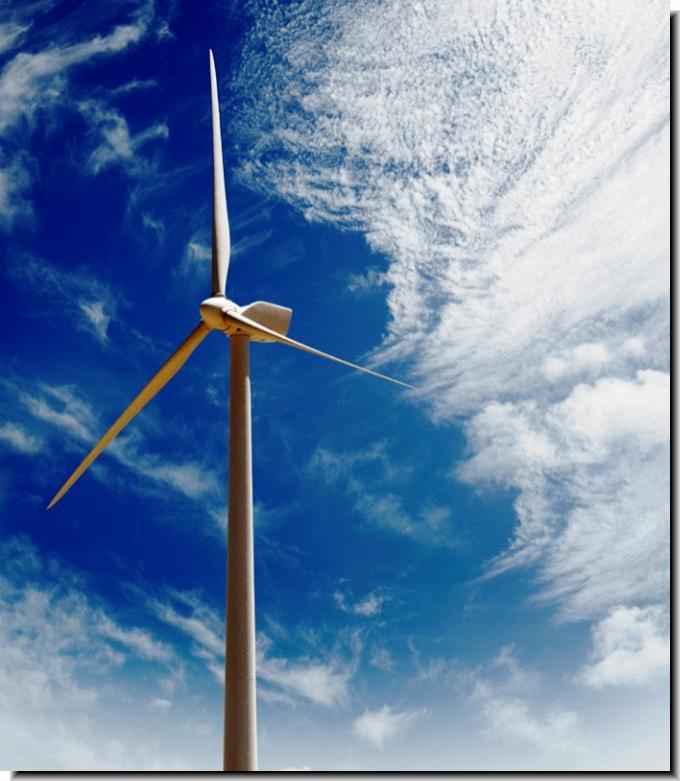
 Wind
speed in the country varies according to season and location in
the country. The wind regimes are stronger during the dry Harmattan
season throughout the country than during the rainy season. The
average wind speeds countrywide is 2.5 metres p/s, which is too
low to productive adequate electricity. However, this may not
be true if such turbines are placed on the cliff edge, very close
to the beach. Wind
speed in the country varies according to season and location in
the country. The wind regimes are stronger during the dry Harmattan
season throughout the country than during the rainy season. The
average wind speeds countrywide is 2.5 metres p/s, which is too
low to productive adequate electricity. However, this may not
be true if such turbines are placed on the cliff edge, very close
to the beach.
Use of windpower for water pumps is also welcomed and is increasingly
seen in the countryside helping rural communities to pump up water
from the local water table. One can be seen as you leave Ghana
Town on the way to Tanji.
| Programmes, projects and policy
pronouncements implemented in the past by the Gambia
Government includes: |
| |
|
| • |
A Presidential Decree which banned the production
of charcoal in 1980. The Government was concerned about
the alarming rate of deforestation; |
| |
|
| • |
Introduction of improved cooking stoves in
1982 to reduce firewood consumption; |
| |
|
| • |
Promotion of Butane gas as a substitute to
firewood under CILSS/EDF Regional Butane Gas Programme in
1992; |
| |
|
| • |
Groundnut
shell briquette production, 1982. This involved the manufacturing
of briquettes in the Gambia from groundnut shell in bulk
quantities to serve as an alternative to charcoal; |
| |
|
| • |
Establishment of the Gambia Renewable Energy
Centre (GREC) to serve as a research, development and promotion
centre for renewable energy technologies in 1985. This followed
the oil shocks and droughts in the mid and late 1970s respectively: |
| |
|
| • |
Introduction of a biogas program. This program
attempted to introduce appropriate Renewable Energy technologies
to the Gambian population
to be able to extract gas from animal waste for their energy
needs; |
| |
|
| • |
Plantations project started in 1950 by the
Forestry Department to create more planted forests to serve
as supplement to the already existing natural forests as
a source of sustainable wood for fuel, furniture and construction
building materials. |
| |
|
| • |
Transfer of the power station to Kotu
in 1980 to cater for the growing demand for electricity; |
| |
|
| • |
Shift from light fuel to heavy fuel oil in
the mid 1980s as a means to make electricity cost affordable; |
| |
|
| • |
Construction of a bulk storage facility and
sea terminal for LPG at Bonto so as to be able to procure
LPG at international market price to make it an affordable
substitute to fuel-wood. |
| |
|
| • |
Fiscal policy on the pump price of imported
fuels so as to encourage efficient utilization of the product;
and |
| |
|
| • |
Move the fuel depot outside the limits of
the city of Banjul for health & safety, security, and
to address environmental concerns. |
|


 Economy
Sectors
Oil & Petroleum |
Nawec (National Water &
Electricity Co.)
Economy
Sectors
Oil & Petroleum |
Nawec (National Water &
Electricity Co.)