 Origins of The Roots Story:
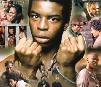 Kunta
Kinte (aka Kunta Kante / Kunte) is the principle Mandinka
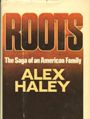
character from the book titled Roots: The Saga of An American
Family (Doubleday: 1976)
written by the Pulitzer Prize winning author Alex Haley.
It is roughly based on his family's oral history starting with
the capture of his slave ancestor, Kunta Kinte, in the village
of Juffureh (Juffure), The Gambia,
in the 1767. Kunta
Kinte (aka Kunta Kante / Kunte) is the principle Mandinka
character from the book titled Roots: The Saga of An American
Family (Doubleday: 1976)
written by the Pulitzer Prize winning author Alex Haley.
It is roughly based on his family's oral history starting with
the capture of his slave ancestor, Kunta Kinte, in the village
of Juffureh (Juffure), The Gambia,
in the 1767.
It was the recited family stories he was told as a youth in the
1920s and 1930s that inspired him to take more interest into his
ancestry. His genealogical interest took on more decisive
action 1964 while in discussion with his publishers, Doubleday,
about a book deal chronicling his clans history. His publishers
were so impressed about the uniqueness of his proposal that they
agreed to advance him money to further his research.
The Story Unfolds:
After extensive interviews with members of his close relatives,
including his grandmother, Cynthia Palmer, as well as his interviews
with people in expert libraries he concluded that his descendant,
Kunta
Kinte, was kidnapped by slavers in Juffure
which is in the tiny country of The Gambia,
West Africa, way back in the 1760s.
It was on a visit to the British Museum in mid 1960s that the
author came to a eureka moment. While looking at the Rosetta Stone
he deduced that if the hieroglyphic language of the ancient Egyptians
could be decrypted then maybe there was a language that could
assist him to decipher the foreign phrases and names that he had
heard as a child growing up in Henning, Tennessee from his grandmother
and sisters in the 1920s and 1930s.
Alex Haley arrived in Juffureh in 1967 hoping to learn more about
the Kinte clan and his famous descendant. He was directed to the
griot Kebba Kanji Fofana who was supposed to possess a deep oral
history of the Kinte family lineage going back generations. Fofana
recited the family's lineage which seemed to match Haley's own
family's stories and he emerged from his trip to Juffureh greatly
moved. So began his work which lasted over a decade on the Roots
saga.
The title of the book was going to be called Before This Anger
however, it was later changed to Roots and was first published
in an abbreviated style by the Reader's Digest in 1974. The finished
manuscript went on sale in bookshops in 1976.
1977 TV Film:
In 1977 the book was adapted into a television mini-series and
was shown by the ABC TV network on the 23 January 1977 and received
130 million viewers over 8 nights. At the time it was the highest
rated TV mini-series according to the Nielsen Ratings. At the
time ABC were reluctant to show it as they thought it could be
a flop so they decided to show it in the unusual format of 8 consecutive
nights so it would be off-air as soon as possible.
The film initially starred  LeVar
Burton as Kunta Kinte (slave name: Toby) who was later played
by John Amos. LeVar
Burton as Kunta Kinte (slave name: Toby) who was later played
by John Amos. Other actors included Louis Gossett Jr. as Fiddler and Maya Angelou
as Nyo Boto. The series had a large impact on race relations in
America and gave African Americans a sense of pride and belonging
and to look at Africa not with shame but in a more positive light.
Other actors included Louis Gossett Jr. as Fiddler and Maya Angelou
as Nyo Boto. The series had a large impact on race relations in
America and gave African Americans a sense of pride and belonging
and to look at Africa not with shame but in a more positive light.
Alex Haley went on to win the Pulitzer Prize in 1977 as well as
many honorary degrees. Two years later in February 1979 came the
mini-series Roots: The Next Generation.


|
|
Controversy:
 After
the publication of his work and release of the min-series controversy
surrounded the authenticity of Roots and the true location of
Juffureh. Accusations of plagiarism, factual inaccuracies and
fictionalised historical accounts abounded. After
the publication of his work and release of the min-series controversy
surrounded the authenticity of Roots and the true location of
Juffureh. Accusations of plagiarism, factual inaccuracies and
fictionalised historical accounts abounded.
Slavery Fact:
Whatever the truth of the book's accounts the fact remains that
millions of West Africans were taken against their will as slaves
and shipped to the Americas.
 The
film made the horrors of the slave trade better known to millions
of Americans who were never taught about this horrific aspect
of their country's involvement in the chronicling of the Trans
Atlantic Slave Trade. Though the majority of slaves were sold
through African middlemen and not captured in raiding parties,
such as in the Juffure example,
the book is representative of the ordeal many Africans had to
go through in the Middle Passage and furthermore highlights the
humiliation and dehumanising injustices many had to endure. The
film made the horrors of the slave trade better known to millions
of Americans who were never taught about this horrific aspect
of their country's involvement in the chronicling of the Trans
Atlantic Slave Trade. Though the majority of slaves were sold
through African middlemen and not captured in raiding parties,
such as in the Juffure example,
the book is representative of the ordeal many Africans had to
go through in the Middle Passage and furthermore highlights the
humiliation and dehumanising injustices many had to endure.
|
List:
Useful Websites:
•
Alex
Haley
Background into the Kunta Kinte research.
• Review
• Foundation
Memorial
www.kintehaley.org
www.kuntakinte.com
31 Old Solomons Island Road, Suite 102
Annapolis, Maryland 21401
Tel: 410-841-6920 Voice/TTY
Fax: 410-841-6505
Email: info@kintehaley.org
• Heritage
Festival
www.kuntakinte.org
PO Box 314
Arnold MD 21012-0314
Phone: 410-349-0338
Fax: 509.561.8274
Sponsored links
Further Reading:
Adams, Russell L. "An Analysis of the Roots Phenomenon
in the Context of American Racial Conservatism." (Publisher:
Paris) 1980.
Blayney, Michael Steward. "Roots and the Noble Savage."
North Dakota Quarterly (Grand Forks, ), Publisher: Winter
1986.
Bogle, Donald. Blacks in American Film and Television: An
Encyclopedia. New York: Garland, 1988.
Brooks, Tim and Earle Marsh. The Complete Directory To Prime-Time
Network TV Shows: 1946-Present. New York: Ballantine, 1979;
Fifth edition, 1992.
Gray, John. Blacks in Film and Television, A Pan-African
Bibliography of Films, Filmmakers, and Performers. New York:
Greenwood, 1990.
Gray, Herman. Watching Race: Television and the Struggle
for "Blackness." Minneapolis, Minnesota: University
of Minnesota Press, 1995.
Haley, Alex: Roots. Garden City, New York: Doubleday, 1976.
Journal of Broadcasting (Washington, D.C.) Special issue
1978.
Kern-Foxworth, Marilyn. "Alex Haley." Dictionary
of Literary Biography. Detroit: Gale, 1985.
Lauren R., and Hemant Shah. "Race and the Transformation
of Culture: The Making of the Television Miniseries Roots."
Critical Studies in Mass Communication (Annandale, Virginia),
December 1992.
"Why Roots Hit Home."
Time (New York) 14 February 1977.
Woll, David. Ethnic and Racial Images in American Film and
Television. New York: Garland, 1987.
|
|




 History Juffure
Slavery History
USEFUL WEBSITES
History Juffure
Slavery History
USEFUL WEBSITES 