Ramadan:
 Start
Date: *Friday 28th February,
2025 See also HERE Start
Date: *Friday 28th February,
2025 See also HERE |
 |
End
Date: See
Koriteh
 |
| *(Note - Dates can vary according
to moon sightings). |

Introduction:
 Each year people in Gambia observe the
holy month of Ramadan (the fasting month) and is the ninth month
of the Muslim lunar year and
is the fourth pillar of Islam.
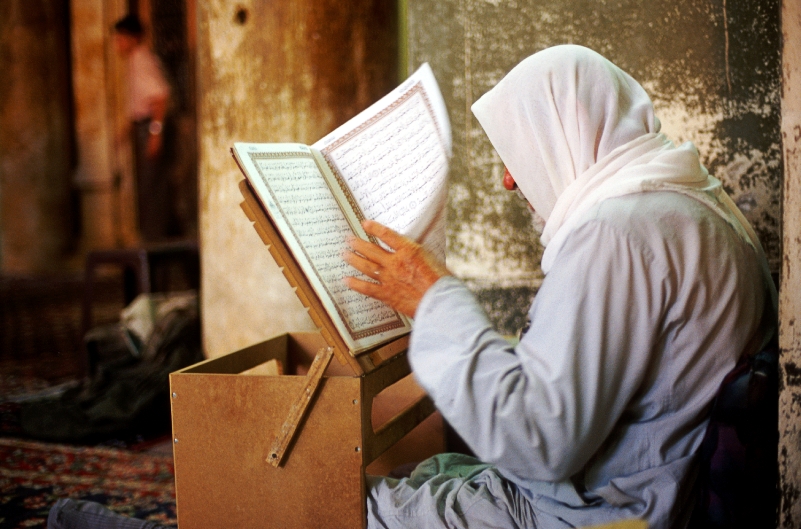
It has double significance as this is the month that the Holy
Quran was revealed to Prophet Muhammad and that night has been
called the Night of Power - Layla-tul Qadr. Devout Gambians Muslims
strive to make themselves pure, especially during this month,
by ritual and spiritual observances.
Each year people in Gambia observe the
holy month of Ramadan (the fasting month) and is the ninth month
of the Muslim lunar year and
is the fourth pillar of Islam.
It has double significance as this is the month that the Holy
Quran was revealed to Prophet Muhammad and that night has been
called the Night of Power - Layla-tul Qadr. Devout Gambians Muslims
strive to make themselves pure, especially during this month,
by ritual and spiritual observances.
During Ramadan, Muslims in The Gambia fast from sun-up to sun-down
daily, not having anything to eat, drink, smoke or indulging in
sexual relations. A special feast is prepared for the breaking
of the fast, where everyone present is invited to partake of the
dinner after the all-day fast.
It is considered rude-form to eat or drink during the day in public
while others are abstaining from food or drink. If a Muslim keeps
the fast during Ramadan, it means sins he committed the previous
year are forgiven.
 The
month ends with special festivities on the Eid al-Fitr (Day of
Feasting) called Koriteh
when families and friends truly rejoice for having completed the
commandment of Allah by successful abstinence and by zikr (remembrance
of Allah) at all times. The
month ends with special festivities on the Eid al-Fitr (Day of
Feasting) called Koriteh
when families and friends truly rejoice for having completed the
commandment of Allah by successful abstinence and by zikr (remembrance
of Allah) at all times.
What is Ramadan?
The word is derived from the Arabic root word ramida or ar-ramad
meaning intense scorching heat and dryness, especially the ground.
From the same root there is ramdaa, sunbaked sand, and the famous
proverb: "Kal Mustajeer minar Ramadaa binnar" - to jump
out of the frying pan into the fire. And in a hadith the Messenger
of Allah (saas) said: "The prayer of repenters is due when
the young camel can feel the sun's heat early in the morning."
(Muslim)
Thus, the word Ramadan is so called to indicate the heating sensation
in the stomach as a result of thirst). Others said it is so called
because Ramadan scorches out the sins with good deeds, as the
sun burns the ground. Some said it is so called because the hearts
and souls are more readily receptive to the admonition and remembrance
of Allah during Ramadan, as the sand and stones are receptive
to the sun's heat.
Rules & Regulations of Ramadan:
Fasting in the month of Ramadan is compulsory on every Gambian
Muslim adult.
Abstaining from food, liquids and sexual activity from dawn to
sunset.
The intention to fast must be made every day before dawn. The
intention (niyyah) may be made during night before going to sleep
or it can also be made at the time of Suhoor before dawn. Suhoor
is eating before fasting. It should be as close to Fajr time as
possible.
What does not break
the fast-
If anyone forgets that he is fasting and eats or drinks, he should
complete his fast, for it is only Allah who has fed him and given
him drink. (A Hadith from Muslim).
Unintentional vomiting.
Swallowing things which are not possible to avoid, such as one's
saliva, street dust, smoke, etc.
Brushing the teeth.
Injection or intra-venous which is solely medical and not nutritional.
Bathing (Al-Ghusul) -, provided extra caution is taken to prevent
water being swallowed by the mouth or nose.
Colouring the eyelids, or using eye drops is permitted whether
the solution reaches the throat or not, the reason being the eyes
are not the regular passage for food or nourishment.
Kissing (Qublah) - for faster who can control himself, for married
couples, expressing affection toward each other by kissing is
inevitable. It may take place any time, day or night.
Rinsing Mouth (Madmadah) - Is one of the procedures of ablution
(wudu). Therefore, the faster is permitted to rinse his mouth
and cleanse his nose by sniffing in water and blowing it out.
However, during fasting the process should be applied lightly
for fear of swallowing water. If water reaches the throat unintentionally,
or without negligence on your parts, the fast is still valid,
but if water is swallowed intentionally, the fast is nullified.
Who is Exempted from Fasting?
The Sick - Those who are sick but are able to fast must do so.
However, if fasting is detrimental to a person’s health, due to
illness, then this person is not required to fast. Those who have
no hope of recovery are to compensate by paying Fidyah – The feeding
of a needy person for every day missed. Those who are temporarily
ill are to make up the missed days after their recovery before
the next Ramadan.
Travellers - A traveller who will face no difficulty in fasting
may choose not to fast, but fasting in his case is preferable.
If, however, fasting will cause a traveller hardships then it
is advised to take up the favour and concession of Allah granted
to him, and break the fast. The missed days must be made up before
the next Ramadan.
Children - Fasting is not required of children until they reach
the age of puberty. The signs of puberty are: the growth of pubic
hair, the occurrence of wet dreams, and in the case of a female,
the menstrual period. If a person turns the age of fifteen and
none of these signs have appeared, then they are considered to
have reached the age of puberty. Although children are not obligated
to fast prior to puberty, they should be encouraged to fast if
there is no fear of harm as this will train them to fast.
Gambian women who are pregnant or breast feeding are allowed to
break their fast if they fear for their health or the health of
their infant or foetus.
* Note: No guarantees are given as to the accuracy of the dates
above.
Moon sightings or regional customs may cause a variation
of the date for Islamic holidays, which begin at sundown the day
before the date specified for the holiday.
|
|
|
|


 Culture & Traditions National
Holidays Religious
Festivals
Culture & Traditions National
Holidays Religious
Festivals