INTRODUCTION:
 The
Bakau resort is in the Kombo Saint Mary District, in the
West Coast Region of The Gambia, and is the nearest holiday resort
to the capital of Banjul which
is 12km to the east. Bakau town includes the Cape
Point promontory, and its northernmost coastline marks the
point where the Atlantic Ocean meets the Gambia River. It is part
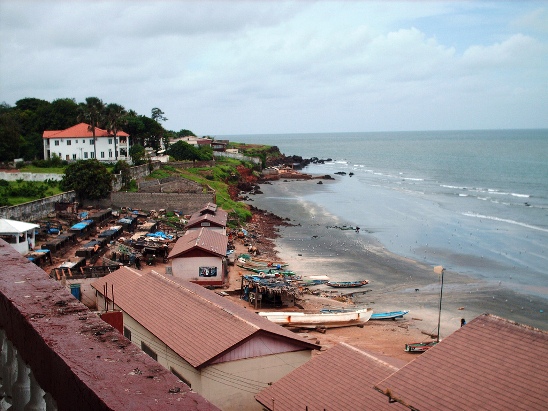
desirable suburb, part shanty town and part coastal resort. The
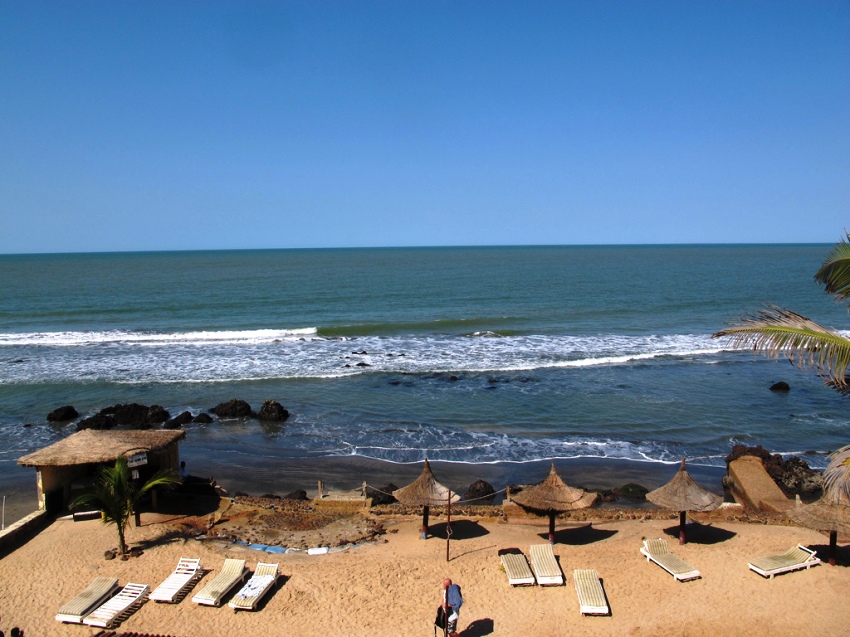
coastline is fringed with palm trees
however, the beach area is composed of rocky, laterite cliff edges
and at high tide the sand can disappear altogether. This is not
the case with Cape Point which descends
onto a wide beach area. The
Bakau resort is in the Kombo Saint Mary District, in the
West Coast Region of The Gambia, and is the nearest holiday resort
to the capital of Banjul which
is 12km to the east. Bakau town includes the Cape
Point promontory, and its northernmost coastline marks the
point where the Atlantic Ocean meets the Gambia River. It is part
desirable suburb, part shanty town and part coastal resort. The
coastline is fringed with palm trees
however, the beach area is composed of rocky, laterite cliff edges
and at high tide the sand can disappear altogether. This is not
the case with Cape Point which descends
onto a wide beach area.
ACCOMMODATION:
 For
travellers there are a number of basic hotels
and guesthouses, and the town is a suitable if you are eager to
lodge in the general area but not be to far away from the resort's
beaches. Coming from the south the first hotel you will come across
is the African Village
Hotel which lies on the edge of a laterite cliff with a slither
of beach at low tide. The Romana Afram Hotel is a small lodge
at the edge of the town but on the main road called. The Garden
Guest House is located in the heart of the gritty urban area.
If you are looking for something more deluxe then you need to
go further north to Cape Point which has a much better beach in
a more genteel location. For
travellers there are a number of basic hotels
and guesthouses, and the town is a suitable if you are eager to
lodge in the general area but not be to far away from the resort's
beaches. Coming from the south the first hotel you will come across
is the African Village
Hotel which lies on the edge of a laterite cliff with a slither
of beach at low tide. The Romana Afram Hotel is a small lodge
at the edge of the town but on the main road called. The Garden
Guest House is located in the heart of the gritty urban area.
If you are looking for something more deluxe then you need to
go further north to Cape Point which has a much better beach in
a more genteel location.
GENERAL AREA:
• Bakau Old Town
 Local
oral history says that the old village was established by the
Bojang family over 500 years ago when crocodiles came and settled
in what is now known as Katchikally. Today, along with the Sanchaba
section, the Old Town is one of the oldest settlements in The
Gambia. Among the first settlers to arrive were fishermen and
their families. During the colonial era the locality was a desirable
area for the British, and formed part of British Kombo which was
basically the capital Banjul, Saint Mary's Island, and the outlying
coastal areas to the west. Local
oral history says that the old village was established by the
Bojang family over 500 years ago when crocodiles came and settled
in what is now known as Katchikally. Today, along with the Sanchaba
section, the Old Town is one of the oldest settlements in The
Gambia. Among the first settlers to arrive were fishermen and
their families. During the colonial era the locality was a desirable
area for the British, and formed part of British Kombo which was
basically the capital Banjul, Saint Mary's Island, and the outlying
coastal areas to the west.


 For
holidaymakers, the Old Town's central points are the sections
around the Atlantic Road
junction, where it meets the Sait Matty Road. There is a post
office, a few banks, a row of small bars and restaurants in front
of the African Village Hotel, shops, a minimarket, Bakau
Market and the tourist
Craft Market (bengdula), where the Atlantic Boulevard meets
the Cape Point Road. If you move a few metres inland you are in
urban Gambia. A little to the south of the djembe drum producers
and batik stands is the village marketplace. For
holidaymakers, the Old Town's central points are the sections
around the Atlantic Road
junction, where it meets the Sait Matty Road. There is a post
office, a few banks, a row of small bars and restaurants in front
of the African Village Hotel, shops, a minimarket, Bakau
Market and the tourist
Craft Market (bengdula), where the Atlantic Boulevard meets
the Cape Point Road. If you move a few metres inland you are in
urban Gambia. A little to the south of the djembe drum producers
and batik stands is the village marketplace.


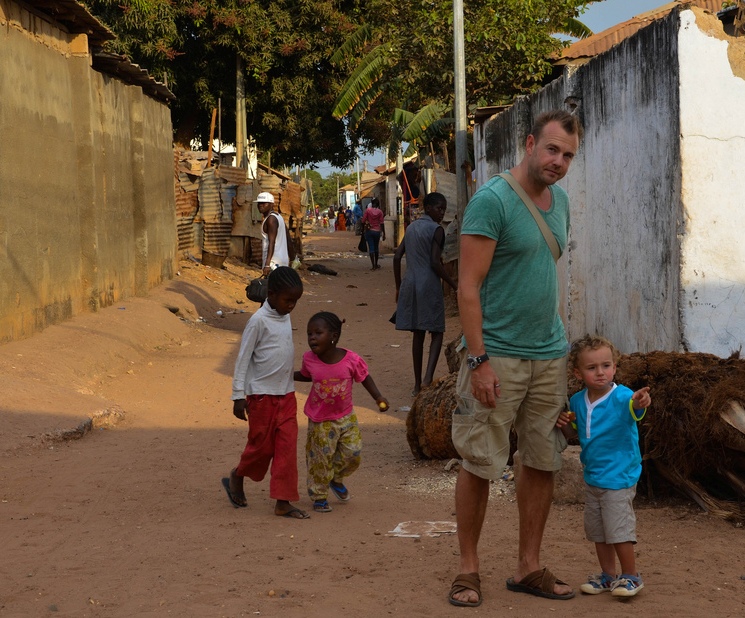
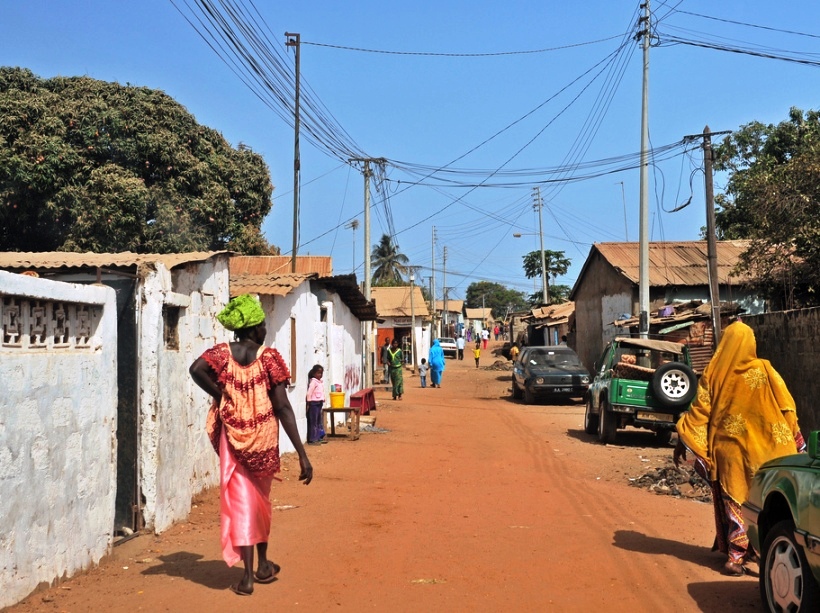
 The
overcrowded residential area just inland is a tightly packed mish-mash
of family compounds, sandy lanes, small shops, mechanic's workshops
and so on. Over the years fishing families are being replaced
by tourist sector workers. The residential neighbourhood,
with its breeze block bungalows, rusting corrugated iron fences
and smelly drainage ditches might not be everyone's cup of tea;
however, there is virtually no traffic here so it's easier to
travel around on foot than comparable areas in Serrekunda.
Some of the densely populated backstreets have local diners, serving
local food, which tend to be harder to find compared to the other
resort areas. The
overcrowded residential area just inland is a tightly packed mish-mash
of family compounds, sandy lanes, small shops, mechanic's workshops
and so on. Over the years fishing families are being replaced
by tourist sector workers. The residential neighbourhood,
with its breeze block bungalows, rusting corrugated iron fences
and smelly drainage ditches might not be everyone's cup of tea;
however, there is virtually no traffic here so it's easier to
travel around on foot than comparable areas in Serrekunda.
Some of the densely populated backstreets have local diners, serving
local food, which tend to be harder to find compared to the other
resort areas.


• Bakau New Town
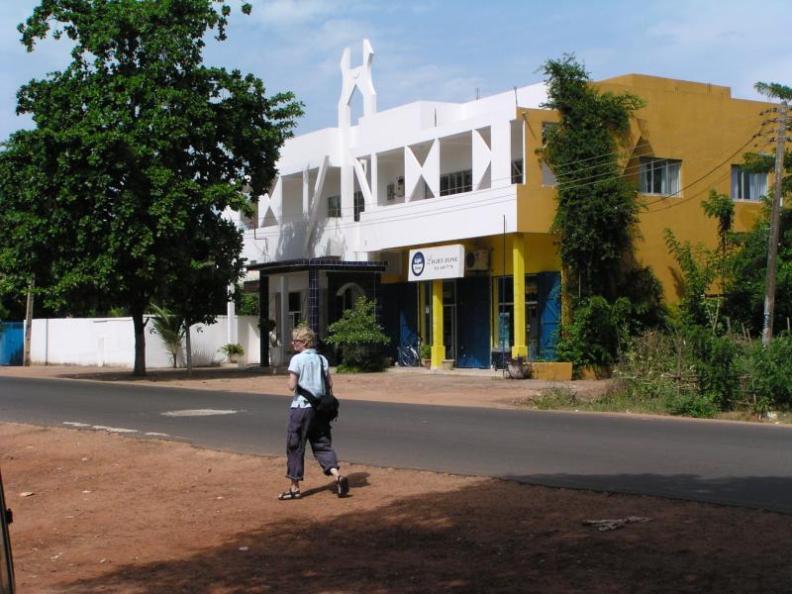
 The
residential area of New Town is rich in mature trees that bloom
into a riot of colour in the rainy season. Its main high street
is the Garba Jahumpa Road (aka New Town Rd.) which connects
the Sait Matty Road to the east, with the Kairaba Avenue's Fajara
section to the west, locally known as the Sabena Junction (the
place where Sabena Airline used to be based). The road is lined
with small offices, clothing shops, minimarkets, tailors' workshops
and private homes. It is very poorly lit at night and does not
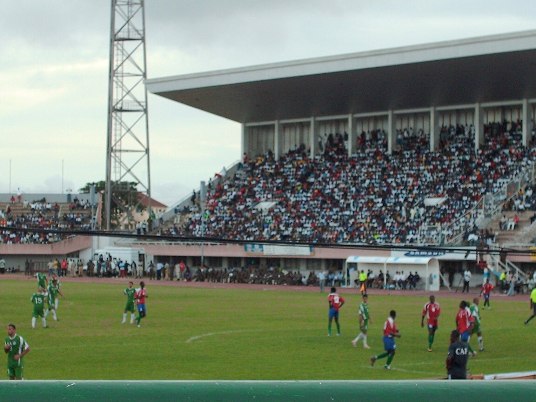
have much of a pavement to talk about. Not far from the centre
point of this road is the Independence Stadium, the Gambia's
national stadium. Built by the Chinese as a gift, it is a grand
open-air venue surrounded by brush and a purpose built ring-road.
The stadium is used for some major music
concerts, July 22nd celebrations as well as football
matches. The
residential area of New Town is rich in mature trees that bloom
into a riot of colour in the rainy season. Its main high street
is the Garba Jahumpa Road (aka New Town Rd.) which connects
the Sait Matty Road to the east, with the Kairaba Avenue's Fajara
section to the west, locally known as the Sabena Junction (the
place where Sabena Airline used to be based). The road is lined
with small offices, clothing shops, minimarkets, tailors' workshops
and private homes. It is very poorly lit at night and does not
have much of a pavement to talk about. Not far from the centre
point of this road is the Independence Stadium, the Gambia's
national stadium. Built by the Chinese as a gift, it is a grand
open-air venue surrounded by brush and a purpose built ring-road.
The stadium is used for some major music
concerts, July 22nd celebrations as well as football
matches.
TOURIST ATTRACTIONS & THINGS TO DO:
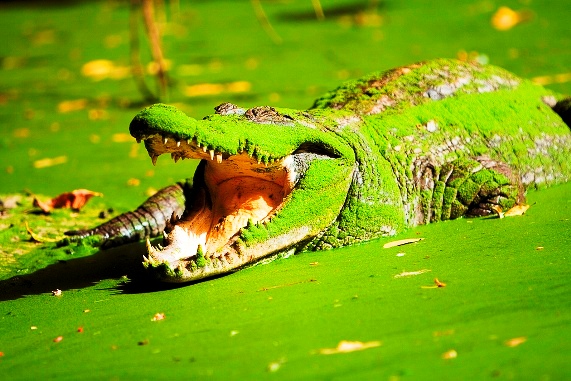
• Kachikally Crocodile Pool
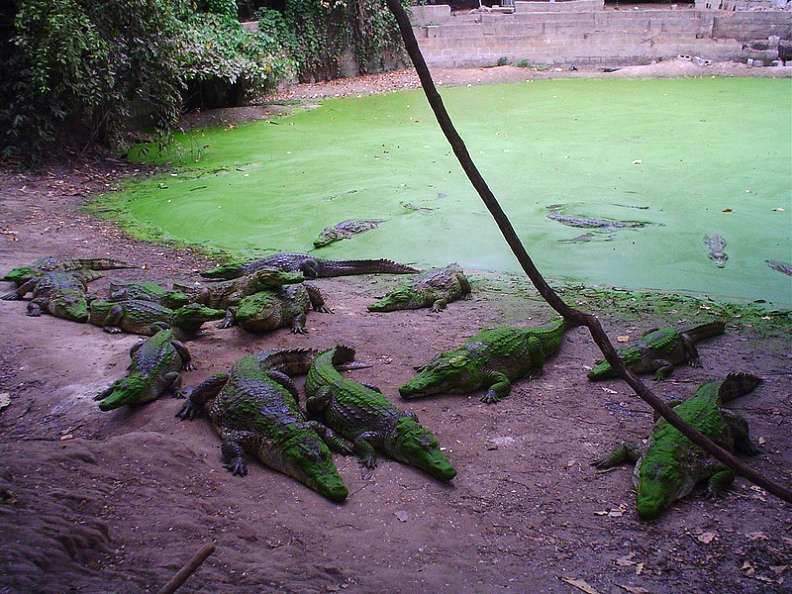
 Located
on the southern section of the Old Town is the Kachikally
Crocodile Pool. Local legend says it is a sacred pool which
was later inhabited by crocodiles over 520 years ago. Its fresh
waters are also said to be a treatment for infertility, bestow
good fortune and occasionally certain rituals are held here, sometimes
accompanies by drumming music. You can also visit a small ethnographic
museum, a souvenir shop, a refreshment bar, all set in over 2.4
hectares of mini-forest which has a nature trail and is home to
many tropical bird species, mammals, reptiles and insects. Located
on the southern section of the Old Town is the Kachikally
Crocodile Pool. Local legend says it is a sacred pool which
was later inhabited by crocodiles over 520 years ago. Its fresh
waters are also said to be a treatment for infertility, bestow
good fortune and occasionally certain rituals are held here, sometimes
accompanies by drumming music. You can also visit a small ethnographic
museum, a souvenir shop, a refreshment bar, all set in over 2.4
hectares of mini-forest which has a nature trail and is home to
many tropical bird species, mammals, reptiles and insects.
• Bird Watching
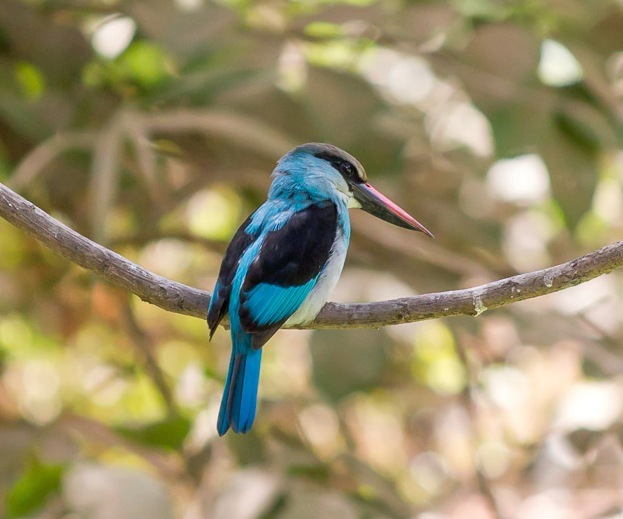
 While
you can find many bird species in Bakau's green areas, beaches
and cliffs such as hooded vultures, Senegal coucal, Verreaux's
eagle owl and the yellow-crowned gonolek. The best place for birdwatching
is in the vicinity of Cape Creek in Cape
Point. This area is largely made up of mangroves, mudflats,
and sections of lightly wooded areas which are rich in various
birds species. While
you can find many bird species in Bakau's green areas, beaches
and cliffs such as hooded vultures, Senegal coucal, Verreaux's
eagle owl and the yellow-crowned gonolek. The best place for birdwatching
is in the vicinity of Cape Creek in Cape
Point. This area is largely made up of mangroves, mudflats,
and sections of lightly wooded areas which are rich in various
birds species.
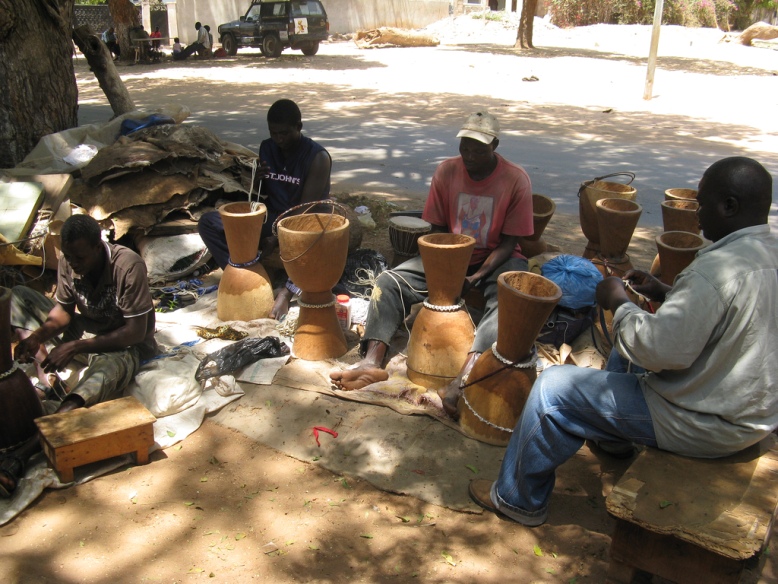
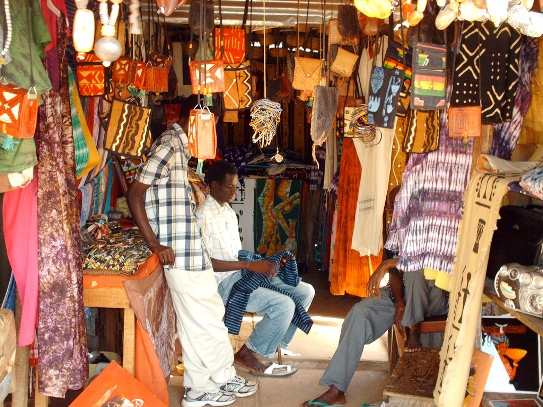
• Craft Market
 For
tourist shopping the Atlantic Boulevard's
Craft Market is an ideal starting point. Here you can observe
local craftsmen at work by the side of the road, under the shade
of the trees. The bengdula has numbered stalls where you can find
souvenirs such as African jewellery, batiks, wooden masks, tie-dye
women's dresses, sand paintings, beads and more. For
tourist shopping the Atlantic Boulevard's
Craft Market is an ideal starting point. Here you can observe
local craftsmen at work by the side of the road, under the shade
of the trees. The bengdula has numbered stalls where you can find
souvenirs such as African jewellery, batiks, wooden masks, tie-dye
women's dresses, sand paintings, beads and more.
• Bakau Botanical Garden
 Located
in Cape St. Mary, on the Old Cape Road, is the
Botanical Garden, which was established in 1894. It is often
missed by most tourists as it looks just like someone's large
private front garden. It is set in an enclosed area within a link
chain fence and there is a nature trail meandering around the
trees as well as a grass shaded seating area called a Bantaba.
Its plushest greenery can be seen towards the end of the rains
in October. Located
in Cape St. Mary, on the Old Cape Road, is the
Botanical Garden, which was established in 1894. It is often
missed by most tourists as it looks just like someone's large
private front garden. It is set in an enclosed area within a link
chain fence and there is a nature trail meandering around the
trees as well as a grass shaded seating area called a Bantaba.
Its plushest greenery can be seen towards the end of the rains
in October.
Specially worth noting among the labelled trees are
the cycads, spiny, young silk cotton trees and the teak tropical
hardwood. Only some of the shrubs and trees are indigenous, such
as the rhun palms, and some need urgent pruning and care. If you
come with a pair of binoculars you might be able to spot a number
of bird species such as the red-cheeked cordon bleu, bronze mannikins
or the odd bulbuls. It's a nice place to visit and relax in the
afternoons and there is very little in the way of noise. The garden
is open Monday to Saturday, 9 am till 5 pm, and there is a small
entrance fee per person. Note: Apply mosquito repellent onto exposed
areas of your body.
(Tel no: 4497354)
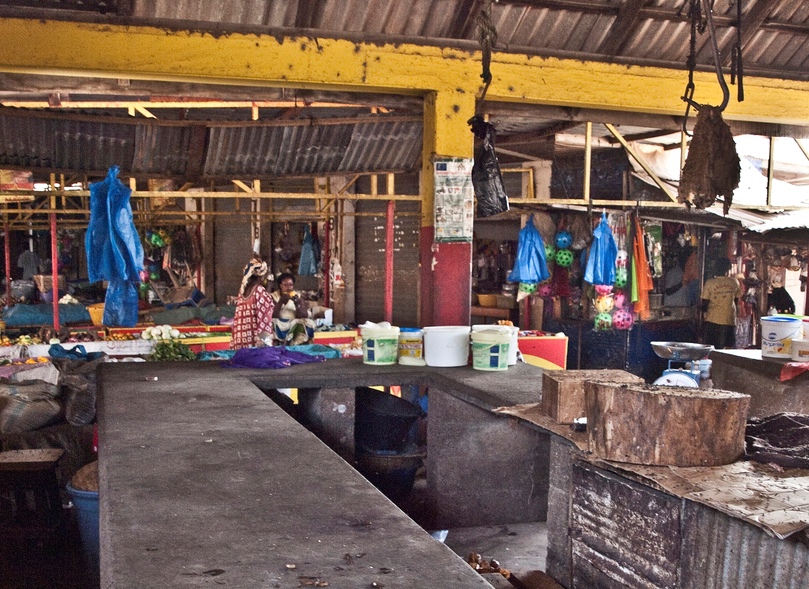
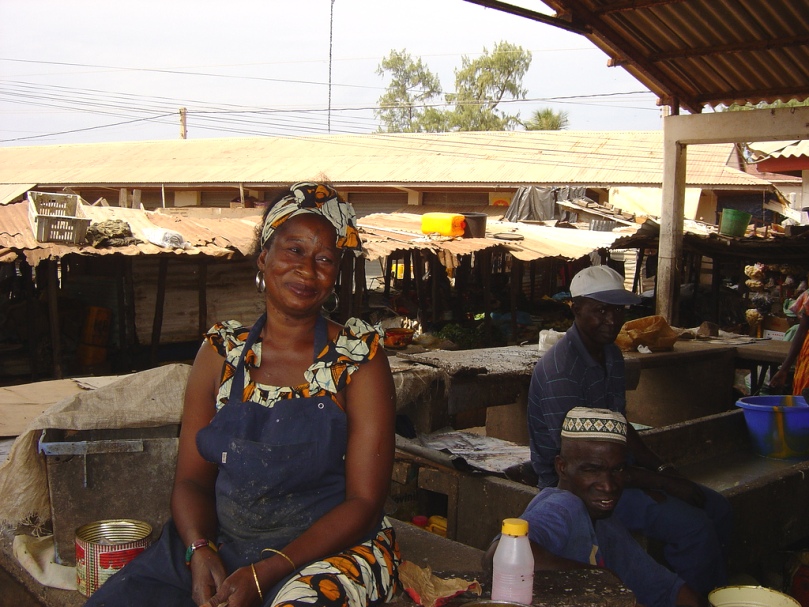
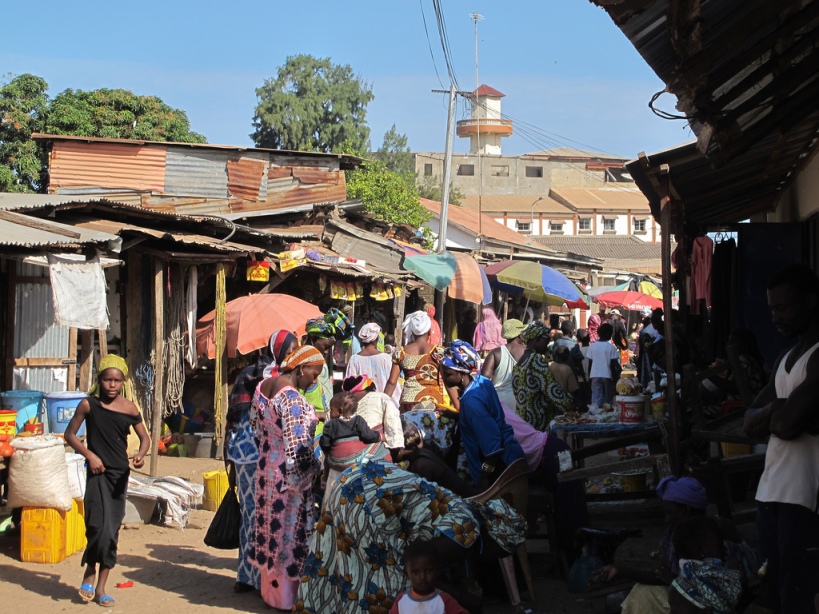
• Bakau Village Market
 Flies
constantly make their way between make-shift stalls piled with
habanero chili peppers, tomatoes and carrots, there are small
hung yellow bags of cooking oil, chili powder, white rice, mounds
of local fruit, used clothing, shoe stalls and lots shoddy, imported
household products. You will also find bowls of fresh fish, beef
and lamb on butcher's chopping boards and teeming with all manner
of flies. The front of the market which is on the main road is
lined with fruit and vegetable stalls selling tomatoes, guavas,
bananas, oranges, apples and other fruits. Flies
constantly make their way between make-shift stalls piled with
habanero chili peppers, tomatoes and carrots, there are small
hung yellow bags of cooking oil, chili powder, white rice, mounds
of local fruit, used clothing, shoe stalls and lots shoddy, imported
household products. You will also find bowls of fresh fish, beef
and lamb on butcher's chopping boards and teeming with all manner
of flies. The front of the market which is on the main road is
lined with fruit and vegetable stalls selling tomatoes, guavas,
bananas, oranges, apples and other fruits.
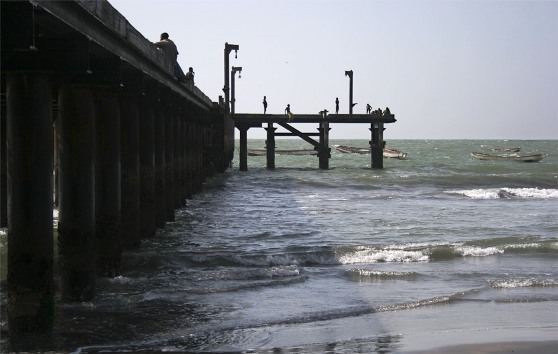
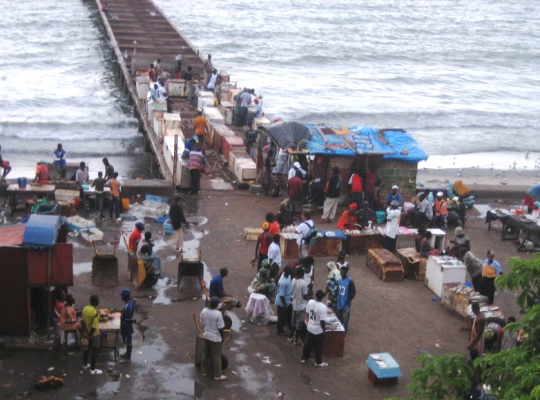
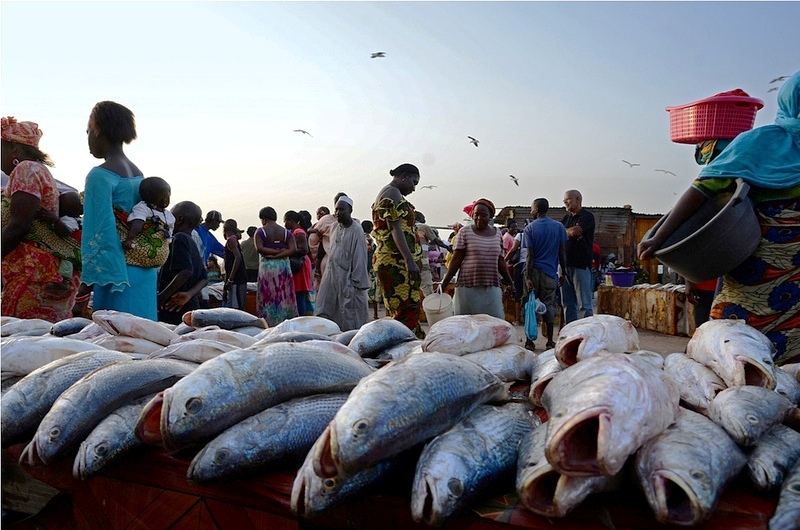
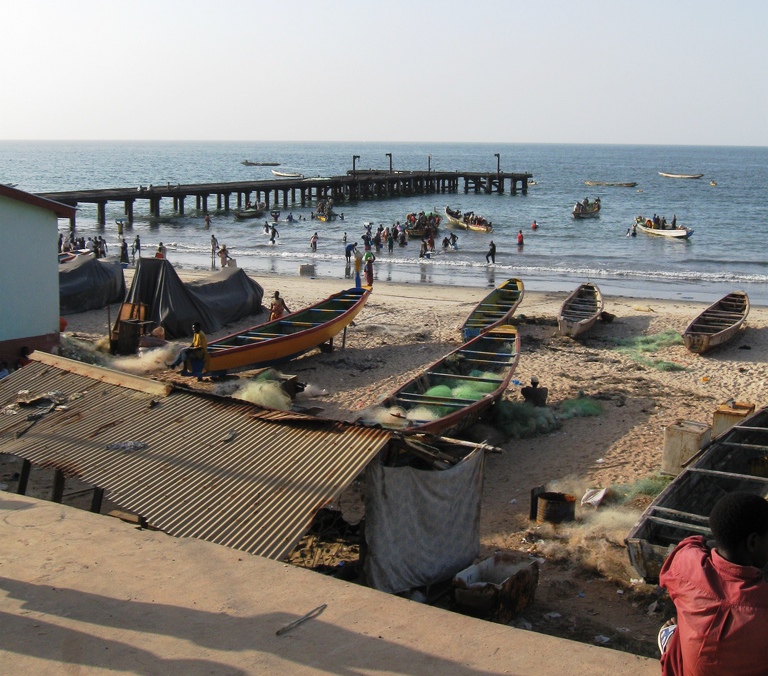
• Bakau Fish Market & Jetty
 On
the other side of the road from the village marketplace is the
beach fishing port of the local Fish
Market where stalls can be found either near quayside or at the
road side 100m from the taxi rank. At the bottom of a steeply
sloped road you can see smokehouses as well as fish, such as bonga
or butterfish, being brought onto the shore area from the brightly
coloured African pirogues, the filleting process and ultimately
the smoking or chilling and packing of the fish. You can buy fresh
shrimps from next door to the taxi rank. On
the other side of the road from the village marketplace is the
beach fishing port of the local Fish
Market where stalls can be found either near quayside or at the
road side 100m from the taxi rank. At the bottom of a steeply
sloped road you can see smokehouses as well as fish, such as bonga
or butterfish, being brought onto the shore area from the brightly
coloured African pirogues, the filleting process and ultimately
the smoking or chilling and packing of the fish. You can buy fresh
shrimps from next door to the taxi rank.
• Other Points of Interest
There is the Gena Bes Batik & Tie Dye Batik Factory
which has introduced modern designs that attracts higher-paying
customers. 'Gena Bes' means 'newly out' in Wolof. Another place
well worth looking at is the African Heritage Centre which
is a combined art gallery and museum displaying and selling art
objects from all over the country.
The local area is also home to the main military camp known as
the Fajara Barracks, which is next door to the fire
service, which in turn is about 50m to the local police station.
Radio Gambia is also located here on the road heading towards
(Stink) Sting Corner and the capital of Banjul
in an area called Mile Seven.
HEALTH & SAFETY:
 The
general area along the coastal strip is the safest place in The
Gambia, given the presence of a large number of professional security
guards, local watchmen, the military barracks, the police station
and numerous residences occupied by international organisation
workers. Safety and security is very good between the army camp
and Kofi Annan Street in Cape Point,
where the road is also lit. The
general area along the coastal strip is the safest place in The
Gambia, given the presence of a large number of professional security
guards, local watchmen, the military barracks, the police station
and numerous residences occupied by international organisation
workers. Safety and security is very good between the army camp
and Kofi Annan Street in Cape Point,
where the road is also lit.
TRAVEL INFORMATION:
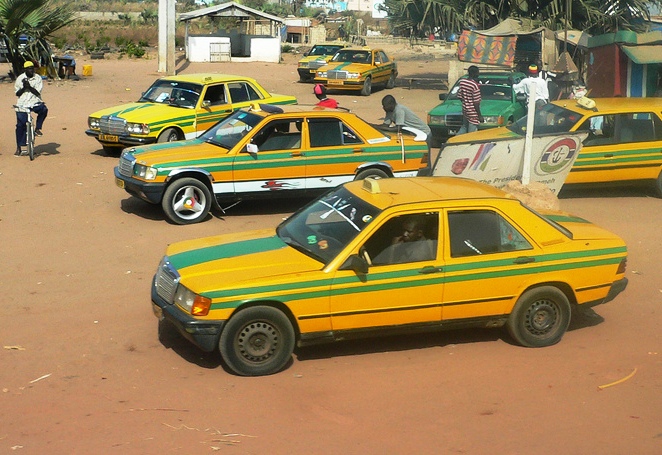
 To
get to the heart of Bakau ask one of the drivers of the yellow
or green tourist taxis to take you to
the local taxi rank next to the fish landing harbour, and you
can start your sightseeing trip from there. To get back to your
hotel (if you are staying in Kololi
or Kotu) just pick up a cab from in front
of the nearby Trust Bank building which is near the African Village
Hotel. To
get to the heart of Bakau ask one of the drivers of the yellow
or green tourist taxis to take you to
the local taxi rank next to the fish landing harbour, and you
can start your sightseeing trip from there. To get back to your
hotel (if you are staying in Kololi
or Kotu) just pick up a cab from in front
of the nearby Trust Bank building which is near the African Village
Hotel.
 Hotels
Map
Photos
Resorts
Hotels
Map
Photos
Resorts


[Geographical coordinates Latitude 13 48° N,
Longitude 16 60° W / Kombo North Saint Mary District (Ksmd)]
|
|
 Attractions
Nature
Reserves
Resorts
Bakau
Banjul
Bijilo
Brufut
Cape
Point
Fajara
Gunjur
Jinack
Island
Kartong
Kololi
Kotu
Makasutu
Sanyang
Serrekunda
Tanji Village
|